
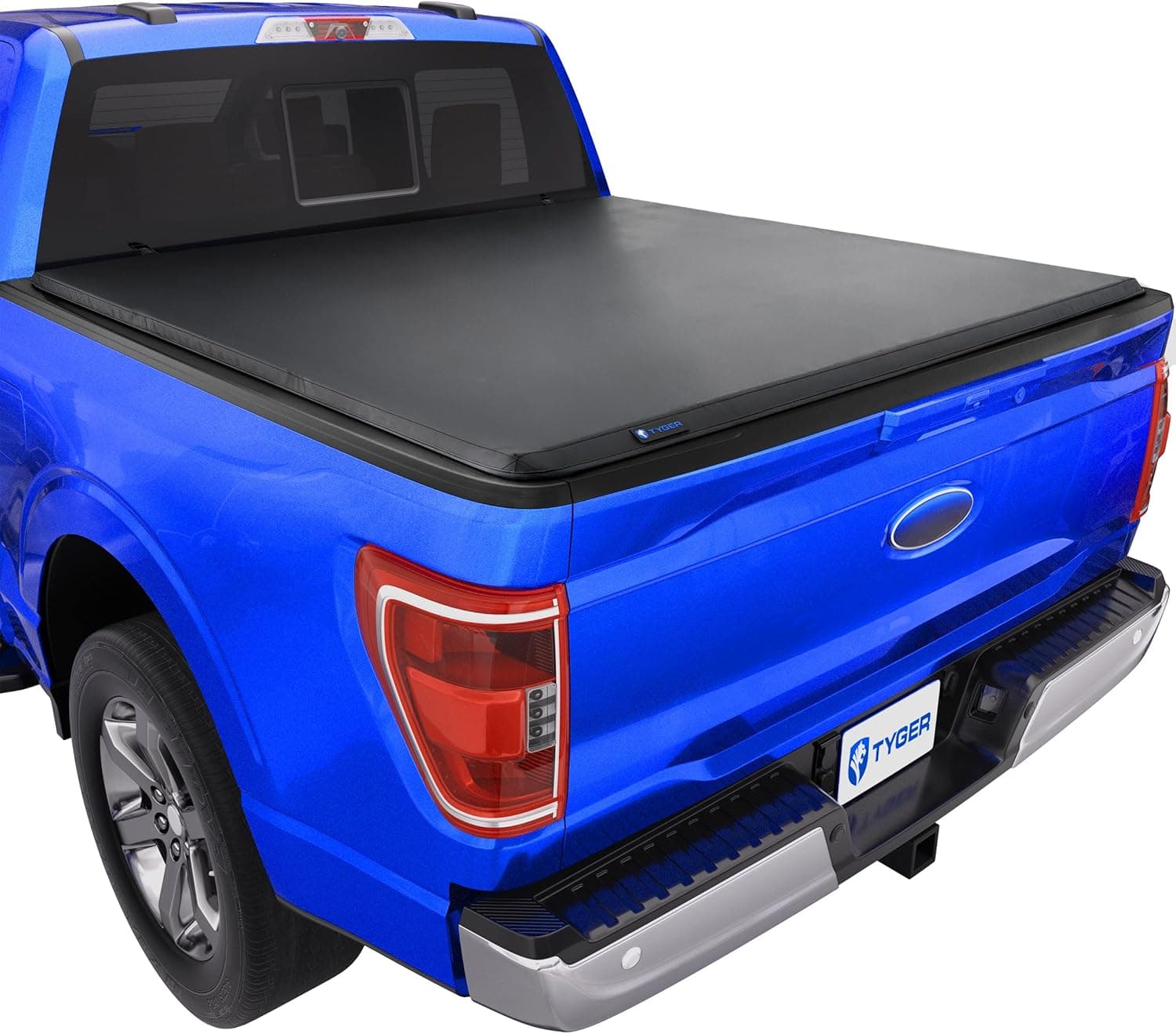
Tyger Auto T3 Soft Tri-Fold Truck Bed Tonneau Cover
Soft tri-fold cover that locks, folds flat, and keeps your bed dry.
$229.00Check It Out
May 1, 2026 · 6 min read
A tonneau cover is one of the most practical truck upgrades you can make — it keeps gear dry, reduces wind drag at highway speeds, and secures the bed without needing a full cab enclosure. The problem is there are too many types and the differences between them aren't obvious until you know what you're looking at. Here's what actually matters.
Soft tonneau covers use vinyl or fabric over a frame. They're lighter, less expensive, and fold or roll out of the way quickly when you need full bed access. The trade-off is security — a soft cover can be cut by anyone with a knife, and a determined thief will get through it. Hard tonneau covers use aluminum or fiberglass panels. They lock firmly and are significantly harder to defeat. They also tend to look cleaner sitting flush with the bed rails. If you're regularly storing valuable gear in the bed: hard cover. If you're mainly keeping things dry and reducing drag: a quality soft cover is better value.
Tri-fold covers fold into three panels toward the cab, giving you about two-thirds of the bed open when folded up. They're the most popular design because they're easy to operate and the panels lie flat without sticking up awkwardly. Roll-up covers roll onto a cylinder toward the cab for full bed access — better if you frequently haul large items. Retractable covers slide on rails into a canister behind the cab — the most expensive option, the cleanest look, and the most secure. For most people buying their first tonneau cover, a quality soft tri-fold is the right starting point.
Yes, modestly. Covered bed tests consistently show 1–3 mpg improvement at highway speed — an open truck bed acts as an air scoop and creates drag. That's real savings over time but shouldn't be the primary reason you buy one. Weather protection and bed security are the main reasons. Think of the fuel savings as a long-term bonus you'll notice on highway trips.
Tonneau covers are truck-specific. They fit by year, make, model, and bed length — 5.5-foot, 6.5-foot, and 8-foot are the common sizes. Know your bed length before ordering, because the wrong size simply won't fit. Most quality covers install without drilling and clamp to the bed rails with hardware included. Typical installation takes 30–60 minutes. If you have a spray-in bed liner that raised the rail height, verify the cover lists compatibility with liners before purchasing.
Under $150: budget soft covers that work but use lighter materials — expect more wear and less sealing quality over time. $150–$250: the sweet spot for a quality soft tri-fold that fits well, seals at the tailgate, and holds up for years of daily use. The Tyger Auto T3 at $229 is consistently one of the best-reviewed covers in this range. $300+: hard covers, retractables, and truck-specific premium options worth it if you're keeping the truck long-term. If you're buying once and keeping it for the life of the truck, the premium is worth it. If you trade trucks every few years, the mid-range soft cover makes more sense.
Soft tri-fold cover that locks, folds flat, and keeps your bed dry.
SpangledStuff may earn a commission if you buy through links on this site, at no extra cost to you. Product prices and availability may change — always verify on the retailer's page before purchasing. Learn more