
Trending
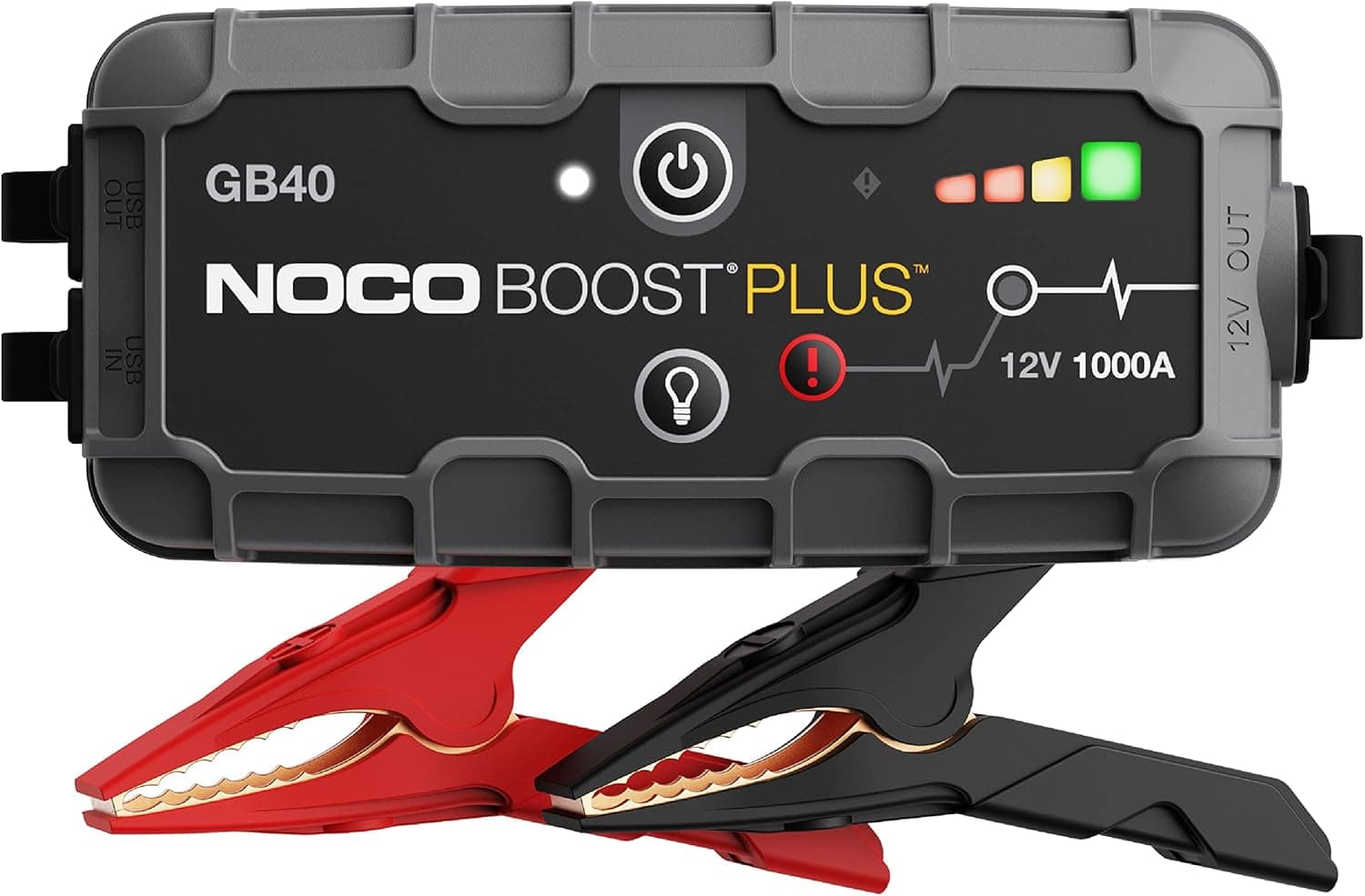
NOCO Boost Plus GB40 1000A UltraSafe Portable Jump Starter
Lithium jump starter that fits in your glovebox and starts dead batteries in seconds.
$99.90Check It Out
May 1, 2026 · 5 min read
Jumper cables require a second car. A good portable jump starter requires nothing except that you charged it before you needed it. The problem is the market is flooded with cheap units that fail the one time you actually need them. Here's what separates a jump starter worth having from a paperweight in your glovebox.
Jump starters advertise peak amps in big numbers on the box — 1000A, 2000A, even higher on the cheap ones. Peak amps is the maximum current the unit can briefly produce. Cranking amps is what it can sustain while actually turning an engine over, and that's the number that matters. Most cheap units don't list cranking amps clearly. As a rule: gas engines up to 3 liters need around 150–200 cranking amps. Trucks and SUVs up to 6 liters need 300–400. The NOCO GB40 is rated for engines up to 6 liters, which covers nearly every personal vehicle on the road.
Old portable jump starters used sealed lead-acid batteries — heavy, bulky, slow to charge, and they degraded badly in cold weather, which is exactly when you need a jump starter most. Lithium iron phosphate units like the NOCO GB40 are a fraction of the weight and size, hold a charge for months sitting on a shelf, and work reliably in cold weather. The only advantage lead-acid had was price, and lithium has closed that gap significantly. There's no practical reason to buy a lead-acid jump starter for personal vehicle use anymore.
Cheap jump starters let you connect the clamps backwards and arc — which can damage your battery or fry your vehicle's electronics. A quality unit has reverse polarity protection: connect the clamps wrong and nothing happens until you fix it. Spark-proof clamp design is also standard on quality units. The NOCO line uses their UltraSafe system — you can connect it wrong all day and it won't pass current until the polarity is correct. That alone justifies the price difference over a no-name unit.
Before you buy, know your engine size. A 4-cylinder in a sedan is usually 2–2.5 liters. A V6 truck is 3.5–4 liters. A V8 truck or large SUV runs 5–6 liters. Match the jump starter's rated engine compatibility to your vehicle — most quality units list this on the packaging. If you're buying for someone else and don't know their vehicle, buy a unit rated for 6+ liters. It covers everything except commercial diesel trucks.
Under $40: covers small cars, construction is usually poor, safety features are hit or miss — not worth relying on. $60–$100: solid lithium units that cover most passenger vehicles. The NOCO GB40 at $100 is the most consistently trusted option in this range. $100+: heavy-duty lithium units for diesel trucks and commercial vehicles. For most people driving trucks and SUVs, the $60–$100 range is the right call — reliable, safe, and small enough to leave in the glovebox and forget about until you need it.
Lithium jump starter that fits in your glovebox and starts dead batteries in seconds.
SpangledStuff may earn a commission if you buy through links on this site, at no extra cost to you. Product prices and availability may change — always verify on the retailer's page before purchasing. Learn more